Security
Seed Investors Asking About SOC 2? What to Show Them Before You Have a Report

Updated: Nov 23, 2026
When a seed investor asks about SOC 2, they usually want proof that security will not stall your first enterprise deals. That proof includes:
- a named security owner
- written policies
- access controls that already run, such as SSO, MFA and automated user provisioning and offboarding
- an exportable audit trail
- an incident response plan
- a realistic timeline to a Type I or Type II report
Access control is a part of SOC 2 audit preparation that early teams often postpone, and it is hard to rebuild after the fact.
TL;DR
- Investors use the SOC 2 question to gauge sales risk. A credible plan plus working controls answers it at seed.
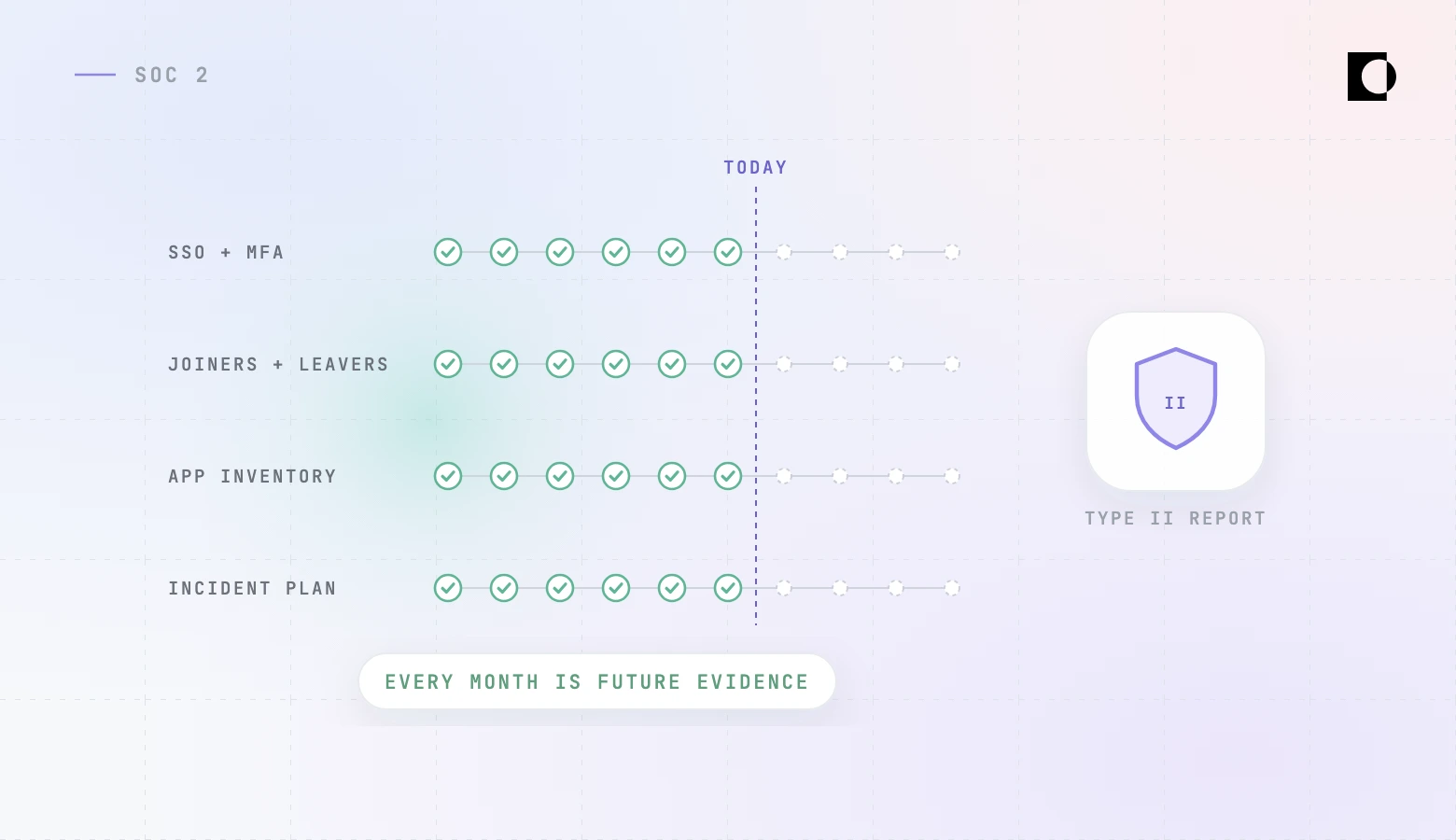
- A Type II report needs controls running over an observation period, so controls you run now are already working when that window opens.
- Bring a one-page control map, live SSO and MFA coverage, joiner and leaver records, an app inventory and an incident response plan.
- Access controls are the cheapest place to start and the most painful to reconstruct later.
- Compliance automation tools collect evidence. They cannot create controls you have not put in place.
About the Author: This guide comes from the ShiftControl team. ShiftControl’s founders scaled IT at ExpressVPN. ShiftControl is SOC 2 Type 2 compliant, ISO 27001 certified and signed the CISA Secure by Design Pledge in 2024, so we have gone through this process ourselves and alongside customers.
Why do seed investors ask about SOC 2 before you need a report?
The SOC 2 question is really a question about how fast you can sell. Enterprise buyers send security questionnaires during procurement. A startup that cannot answer them can see deals stall.
An investor asking about SOC 2 is checking three things:
- Sales readiness: Will security reviews block revenue after this round?
- Founder judgment: Do you know what the work involves, or will it surprise you?
- Operational discipline: Do basics like offboarding already happen consistently?
A confident, specific answer beats a vague “we’ll get SOC 2 when customers ask.”
What is the difference between SOC 2 Type I and Type II, and which matters at seed?
The two report types answer different questions, so it helps to know which one your timeline points toward.
SOC 2 is an attestation against the AICPA’s Trust Services Criteria:
- Security is the only mandatory criterion.
- Availability, processing integrity, confidentiality and privacy are optional and depend on your services.
The two report types differ like this:
- Type I evaluates whether your controls are suitably designed at a single point in time.
- Type II assesses both design and operating effectiveness over a continuous observation period.
A driving test helps explain why that difference matters. A Type I report resembles the examiner riding with you for one drive. A Type II report resembles an insurer reviewing months of telematics data. The second one tests whether your behavior holds when nobody is watching. That is why the observation window exists, and why it cannot be compressed.
The practical takeaway: the Type II clock only produces useful evidence once controls actually run. Founders who start logging access changes and documenting offboarding at seed already have a track record when an enterprise buyer asks.
Cost belongs in the conversation too. A SOC 2 report requires budget for readiness work, any tooling and the independent auditor. Investors will want to know whether you have budgeted for it.
What should you show investors before you have a SOC 2 report?
Once you know where you are headed, the next step is turning “we take security seriously” into artifacts an investor can actually look at.
| Artifact | What it proves | How to produce it |
|---|---|---|
| Named security owner | Someone is accountable | An org chart line, even if it is the COO |
| Core policy set | You have defined the rules | Information security, access control, incident response policies |
| Control map | You know the gaps | A readiness assessment against the Trust Services Criteria |
| SSO and MFA coverage | Access is centralized | An admin console screenshot or export |
| Joiner and leaver records | Offboarding happens reliably | An access change log with dates and actors |
| App and permission inventory | You know where data goes | A list of connected apps and their OAuth scopes |
| Incident response plan | You can respond to a breach | A written plan plus a named responder |
| Timeline to report | You have budgeted for it | Target quarter for Type I or Type II |
Auditors typically ask for the same material before fieldwork: a system description, security policies, risk assessments, access control lists, incident response plans and org charts. Preparing it for investors also prepares it for the audit.
How do you run a SOC 2 readiness assessment as a seed-stage startup?
With the artifact list in hand, the readiness assessment shows you which items are missing. A lightweight version works for most seed teams:
- Scope the system. List your infrastructure, software, people and data flows.
- Choose your criteria. Security is required. Add others only if customers need them.
- Inventory your controls. Note what already runs: SSO, MFA, code review, backups.
- Map the gaps. Mark each control as missing, partial or operating.
- Fix access first. It is cheap to fix and hard to reconstruct (see below).
- Set a timeline. Pick a target window for Type I and when the Type II observation period starts.
The Trust Services Criteria build on the COSO internal control framework, and many SOC 2 controls overlap with ISO 27001 and the NIST Cybersecurity Framework. If European buyers are in your pipeline, plan for ISO 27001 alongside SOC 2 so you can map shared controls once.
Which controls should you automate first?
Of all the gaps a readiness assessment turns up, access control deserves the earliest attention. Access drifts quietly as you hire, and auditors ask for access lists across the whole observation period. Policies can be written quickly. A long history of clean joiner and leaver records cannot be backfilled.
Start with these controls:
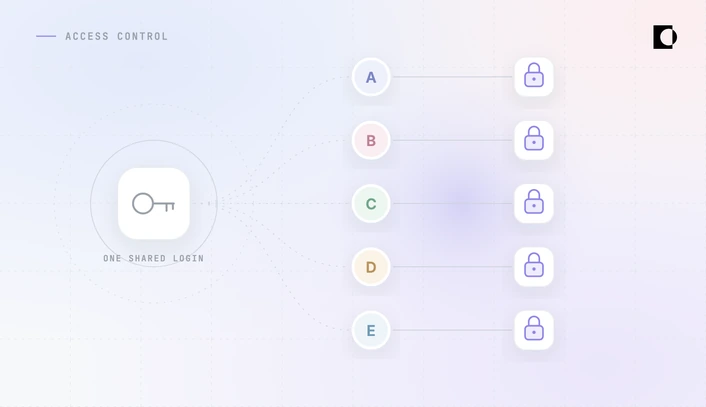
- SSO: One login per person means one place to revoke access.
- MFA enforcement: Apply it at the account level with no exceptions for founders.
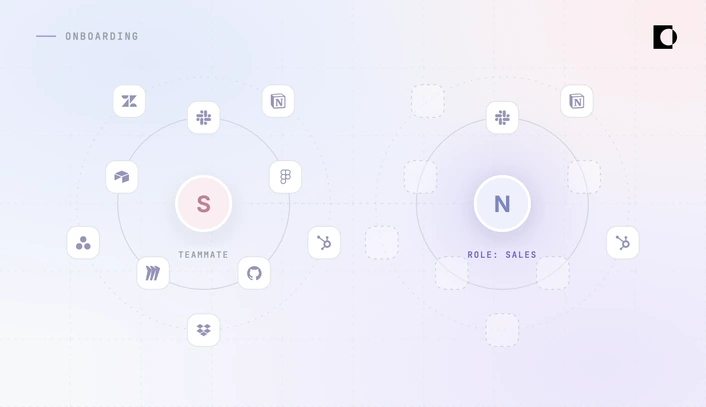
- Automated user provisioning: Assign access by department, role or location so new hires get exactly what policy says.
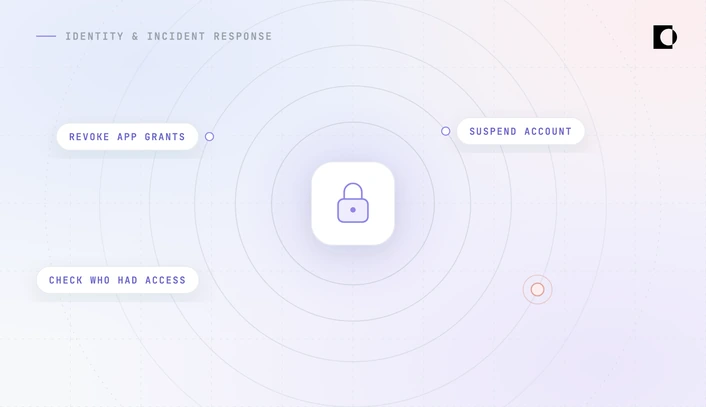
- Same-day offboarding: Tie account suspension to the HRIS termination date.
- Third-party app review: Check which apps hold OAuth access to company data.
This is where ShiftControl fits for teams on Google Workspace. It is purpose-built for Google Workspace and built for operators, so no dedicated IT hire is required. Every access change made in the platform is logged with who or what made it, and assignment history exports to CSV, Excel or JSON as audit evidence.
The platform also has a clear boundary. On exit, Google access is removed automatically, and every other app becomes a task for its owner.
Do you need SOC 2 compliance software like Vanta or Drata at seed?
Automating access raises a related question founders often ask next: should you buy a compliance automation platform now?
Founders searching “Vanta vs Drata” are comparing SOC 2 compliance software that maps controls to the criteria and collects evidence from connected systems. These tools are useful once you commit to an audit date. They report on controls that other systems run, such as onboarding and removing a departed employee’s access.
A sensible sequence for most seed teams:
- Now: Run access reviews, offboarding and app reviews consistently and keep the logs.
- Before the audit: Add a compliance automation platform to package evidence.
- During the audit: Work with an independent auditor to issue the report.
What about SOC 2 bridge letters and cyber insurance?
Beyond the audit itself, two adjacent topics come up in diligence, and investors notice when founders know where each one fits.
A SOC 2 bridge letter is a statement from a company’s management covering the gap between the end of its last report period and today. It only applies once you have a report. At seed, the equivalent is your readiness map and timeline.
Cyber insurance applications ask questions that overlap heavily with SOC 2: MFA, offboarding and incident response. Answering them well can support your application.
Annual Core and Enterprise plans include IR-1 cyber incident response from Blackpanda, with 24/7 access to expert responders. That gives you a named responder for the incident response line on your artifact list.
Frequently Asked Questions
Do seed investors require a SOC 2 report?
Rarely. Most want a credible plan and evidence that basic controls already operate.
Should we aim for Type I or Type II first?
Many startups start with Type I to show design, then move to Type II. Start running controls early either way.
Who should own SOC 2 without an IT team?
Usually a founder, COO or operations lead. What matters is having one accountable name.
What is the fastest control to fix?
SSO with enforced MFA, followed by automated offboarding.
Can we claim we are “SOC 2 compliant” before an audit?
Avoid it. Say you are “preparing for SOC 2” and share your readiness status.
How much does ShiftControl cost?
Plans start at $8 per user per month, billed annually. A separate startup tier costs $2 per user per month for the first year, for companies under 5 years old with 30 people or less.
About ShiftControl
ShiftControl is an IT operations and SaaS management platform purpose-built for Google Workspace and built for operators, not IT teams. It gives you everything you need for your business’s size across four jobs:
- provisioning and access
- SaaS spend management
- app-permission visibility
- incident response
Setup takes about 30 minutes through a single Google Workspace login, and no implementation project is needed. ShiftControl is SOC 2 Type 2 compliant and ISO 27001 certified. ShiftControl customer Blackpanda holds SOC 2 Type 2 and ISO 27001.
If an investor’s SOC 2 question caught you unprepared, start with the access controls that build your evidence history. See how ShiftControl gives a small team the control a large company has, minus the complexity and cost, at shiftcontrol.io.
Get started
Experience SaaS management as it should be: straightforward management and robust security with ShiftControl.
Start free trial