Security
Choosing an Identity and Access Management Tool for Your SMB That Includes Incident Response

Updated: Nov 20, 2026
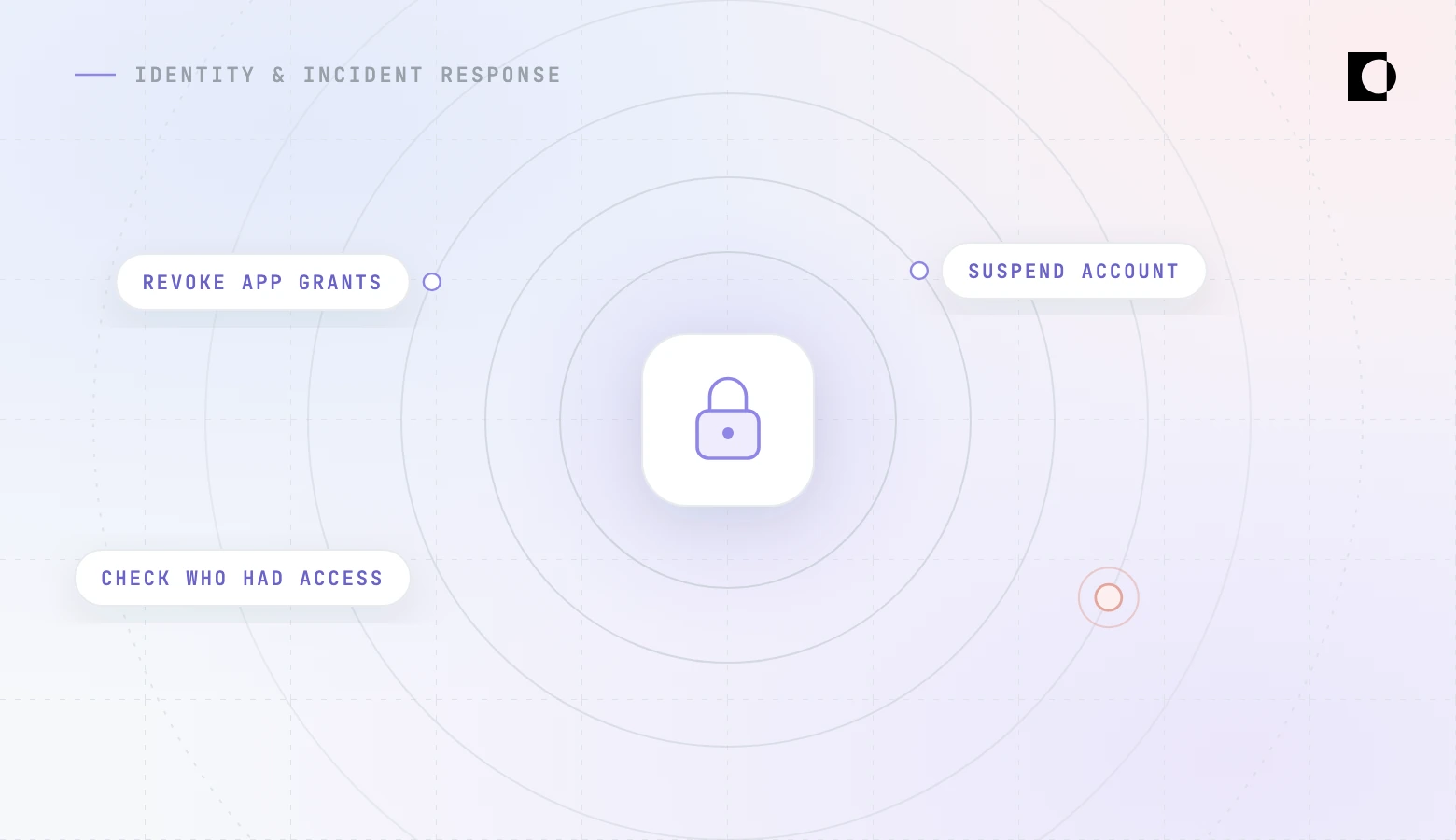
The right identity and access management (IAM) tool for a small or mid-sized business does four things well. It controls who can open which apps, removes access the day someone leaves, shows which third-party apps can read company data, and connects you to human responders when something goes wrong. In many small-business incidents, containment starts with identity actions such as suspending an account or cutting an app's access. That is why IAM and incident response belong in the same buying decision. ShiftControl's founders ran IT at ExpressVPN as it scaled from 100 to 700+ employees across 7 global offices. They then built a platform purpose-built for Google Workspace that bundles access management with Blackpanda's cyber incident response service on annual Core and Enterprise plans, so this guide reflects what operators need when an incident hits.
TL;DR
- Containment during many SMB incidents is an identity task: suspend accounts, revoke app grants, check who had access.
- Buy incident response before you need it. Arranging a responder in the middle of an attack wastes the hours that matter most.
- Prioritize Google Workspace SSO, role based access control, SCIM provisioning, app-permission visibility and audit logs.
- Prefer one platform that covers provisioning and access, SaaS spend management, app-permission visibility and incident response.
- Choose a tool your operations lead can run without a dedicated IT hire.
About the Author: This guide comes from the ShiftControl team. They ran IT through ExpressVPN’s growth across 7 global offices and now build operator-led IT tooling for Google Workspace companies that have no IT department.
What is identity and access management for an SMB, and why should it include incident response?
Identity and access management is the set of controls that decides who gets into which systems, with what permissions, and for how long. For an SMB, these controls usually sit on top of the main directory, often Google Workspace.
Incident response belongs in the same evaluation because attackers frequently get in through identities. Compromised credentials are a common entry point in small and medium-sized business breaches. When a credential is the entry point, the first response moves are all IAM actions:
- Suspend the affected account
- Revoke its sessions and app access
- Review what it touched and which apps it authorized
- Confirm no other accounts share the same exposure
Without a response plan, an IAM tool lets you change access settings but provides no guidance on the sequence of actions needed during an incident. A response retainer without good IAM data leaves responders guessing at who had access to what.
How do access controls and incident response work together during a breach?
Building on that point, the two disciplines split the work across an incident’s timeline. Picture a keycard system. A stolen badge stops working everywhere at once because every door checks the same central list. Doors with their own separate keys would each need visiting one by one. SSO and centralized provisioning give you that central list. Incident responders are the people who read the door logs to work out where the intruder went.
| Incident phase | IAM tool’s job | Incident responder’s job |
|---|---|---|
| Detection | Flag risky app grants, accounts without 2-Step Verification, inactive users | Triage alerts and confirm a real incident |
| Containment | Suspend accounts, block apps org-wide, revoke access | Direct the containment sequence and limit spread |
| Investigation | Provide audit logs of access changes | Run forensics and identify scope |
| Recovery | Reprovision clean access by role | Advise on hardening and, if needed, ransomware negotiation |
Good practice here includes thorough audit logging, alerts for anomalous activity such as failed logins, and fast automated access revocation. Speed matters because every minute an attacker keeps access gives them more room to move between systems.
Which IAM features should an SMB prioritize?
With the incident timeline in mind, start by mapping your current access, identifying critical systems and data, and defining clear roles and responsibilities. Then check for these capabilities:
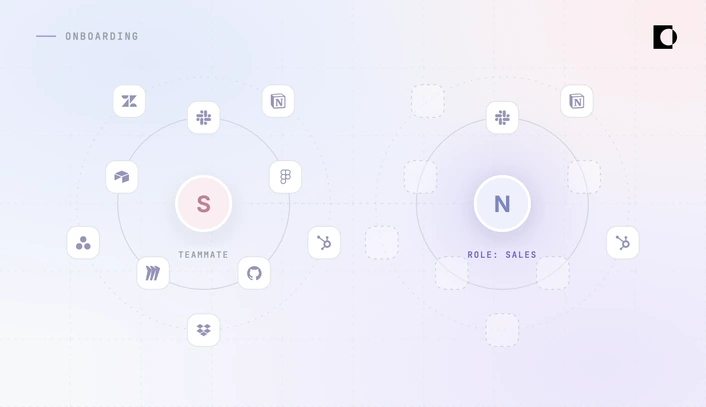
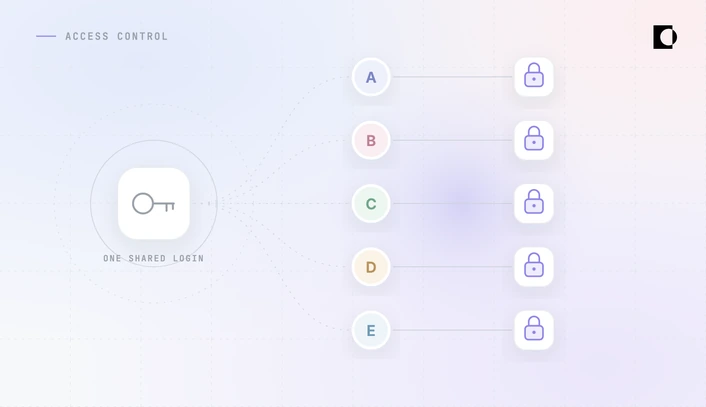
- Google Workspace SSO: one sign-in point, so revocation is a single action.
- Role based access control: access tied to department, role or location, so permissions follow the job.
- SCIM provisioning: automatic account creation and removal in apps that support it. Ask how the tool handles non-SCIM apps, because many SMB tools lack SCIM.
- HRIS sync: hires, role changes and terminations flow from your HR system without manual tickets.
- App-permission visibility: a list of which third-party apps can read mail, files and calendars, and who granted them.
- Shadow IT discovery: apps employees authorized without approval.
- Audit trails: who changed what access, and when.
What should a cyber incident response service or incident response retainer include?
A separate but equally important question is what the human side covers. An incident response retainer is a pre-agreed arrangement giving you access to responders on demand. Look for:
- 24/7 access to experienced responders
- Containment and initial investigation
- Ransomware negotiation support
- Attack surface management scans of your domains and IPs
- Help obtaining cyber insurance quotes, since cyber insurance for small businesses pairs naturally with a response plan
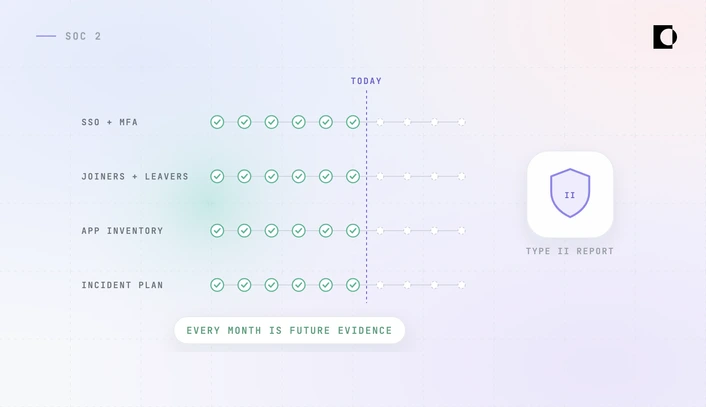
Compliance adds another reason. Frameworks such as SOC 2 (CC7.4), ISO 27001 (Annex A 5.24 and 5.26), the HIPAA Security Rule and PCI DSS all expect documented incident response capabilities. A retainer plus IAM audit logs supports that evidence, though you still need a written incident response plan.
What does a strong employee offboarding checklist look like?
Offboarding is where IAM and incident prevention meet most often, because leftover access is an open door. A practical employee offboarding checklist:
- Trigger offboarding from the HRIS termination date.
- Suspend the Google account, including groups and apps.
- Transfer the person’s files and mail ownership.
- Remove access in non-SCIM apps and assign a named owner to each.
- Review third-party apps the person authorized.
- Reclaim paid licenses.
- Recover devices and escrowed encryption keys.
- Keep the audit record for compliance.
How should an SMB compare IAM tools without overbuying?
Stepping back from features, the bigger risk is buying an enterprise stack you cannot run. Adding incident response to IAM can mean higher-tier licensing, SIEM integrations and security analysts. Basic IAM covers provisioning alone at a lower per-user cost.
| Question to ask | Why it matters |
|---|---|
| Can a non-IT operator run it? | Many SMBs have no IT hire |
| Is incident response included or extra? | It determines your real total cost |
| Is pricing public? | Lets you budget before the sales call |
| How long is setup? | Long implementations stall small teams |
| Does it double as a SaaS management platform? | Fewer tools means fewer gaps between them |
Vendors such as Okta, BetterCloud, Rippling and Auth0 each serve parts of this need. Okta, for example, publishes per-user pricing from $6/user/month with a $1,500 annual minimum on its pricing page, and quotes its upper tiers. Compare total cost across all four jobs: provisioning and access, SaaS spend management, app-permission visibility and incident response.
ShiftControl was designed around that comparison. It is built for operators, not IT teams, and handles all four jobs in one platform instead of four tools and a spreadsheet. IR-1, Blackpanda’s incident response service, is included on annual Core and Enterprise plans. Setup takes about 30 minutes through a single Google Workspace login, with no implementation project.
Frequently Asked Questions
Do small businesses need incident response if they have MFA? Yes. MFA reduces credential risk but does not remove it, and someone still needs to contain and investigate when an incident happens.
What is the difference between IAM and a SaaS management platform? IAM controls access. A SaaS management platform also tracks app spend, renewals and shadow apps. Many SMBs benefit from both in one tool.
Is SCIM provisioning required? It helps where apps support it. Make sure your tool also handles non-SCIM apps, for example by assigning removal tasks to app owners.
What does attack surface management do? It scans your internet-facing domains and IPs for exposures attackers could use.
Can incident response help with cyber insurance? Some providers, including Blackpanda through IR-1, offer access to cyber insurance quotes.
Do I need an IT hire to run IAM? Not with tools designed for operators. Setup through a single Google Workspace login avoids an implementation project.
About ShiftControl
ShiftControl is an IT operations platform purpose-built for Google Workspace, made for companies without a dedicated IT team. It brings provisioning and access, SaaS spend management, app-permission visibility and incident response (IR-1 via Blackpanda on annual Core and Enterprise plans) into one place. The company treats security as a basic right, so the basics are not locked behind expensive tiers, and it publishes public pricing with a standard per-user rate and a separate discounted startup tier. ShiftControl is SOC 2 compliant, ISO-aligned and a signer of the CISA Secure by Design Pledge.
If you want access control and incident response from a single platform your operations lead can run, see how ShiftControl works at https://shiftcontrol.io/.
References
Get started
Experience SaaS management as it should be: straightforward management and robust security with ShiftControl.
Start free trial