Guide
Stuck Paying for Unused SaaS Licenses Until Renewal? Check the Seat Reduction Clause

Updated: Nov 20, 2026
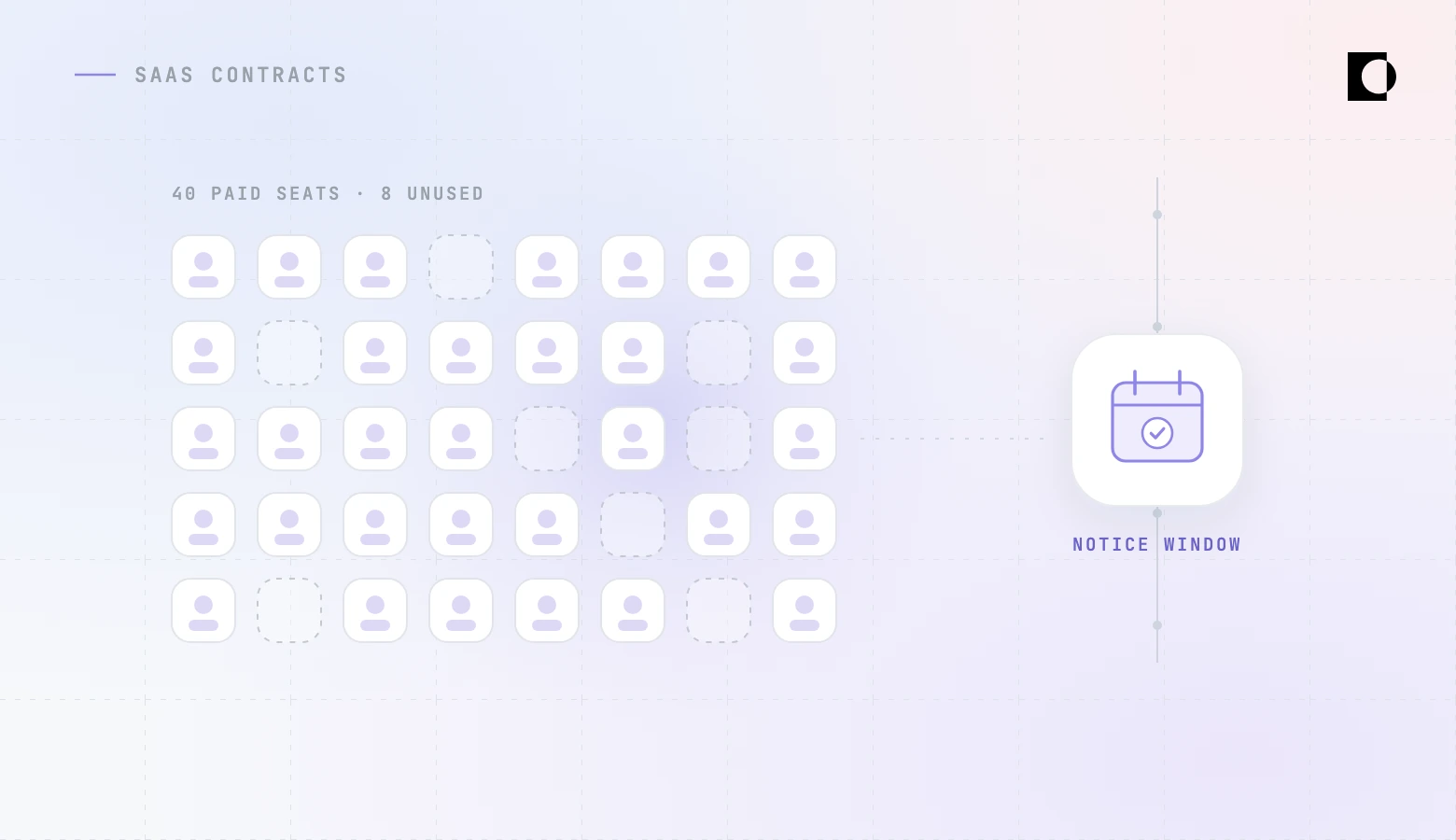
If you are paying for SaaS seats nobody uses and the vendor says you can only reduce them at renewal, look for one clause in your order form: the seat reduction clause, sometimes called a "flex-down" or "true-down" right. It sets whether you can lower your licensed seat count, when you can do it, by how much, and the notice deadline you must meet. Many teams only find this clause after an auto-renewal has locked in last year's headcount for another term. ShiftControl is a SaaS spend management and IT operations platform made for Google Workspace. Its founders scaled IT at ExpressVPN. The teams that cut seats successfully are the ones who know their real usage before the notice window closes.
TL;DR
- The seat reduction clause decides your options. Without one, you usually cannot cut seats until the contract term ends.
- Notice windows matter as much as the clause. Miss the deadline and many contracts renew at the current seat count.
- Usage data is your bargaining power. Vendors respond faster when you show evidence of inactive seats.
- Offboarding gaps are a common source of waste. Leavers who keep paid seats are the easiest savings to find.
- Negotiate flexibility at signing. Your leverage is highest before you commit.
About the Author: ShiftControl was built by operators who scaled IT at ExpressVPN from 100 to 700+ employees across 7 global offices. The product is built for operators, not IT teams.
What is a seat reduction clause in a SaaS contract?
A seat reduction clause is the contract term that allows a customer to lower the number of paid licenses during or at the end of a subscription term. It is the first thing to check when you are overpaying, because it sets the limits on everything else you can do.
These clauses usually take one of three forms:
- Renewal-only reduction: You can lower seats only when the term renews, and only with written notice before a set deadline.
- Mid-term flex-down: You can reduce seats during the term, often with a cap on how far you can go.
- No reduction right: The committed seat count is your floor for the whole term, and sometimes for renewals too.
Some contracts also include a minimum commitment. That is a separate floor that applies even when a reduction clause exists.
Why can you add seats mid-term but not remove them?
Building on that definition, the frustration most buyers feel comes from how annual SaaS contracts are structured. Many agreements let you add seats at any time but only allow reductions at renewal.
Think of it like a ratchet. A ratchet turns freely one way and locks the other way. Adding a seat raises the vendor’s committed revenue, so contracts let it happen at once. Removing a seat lowers revenue the vendor has already counted on, so contracts often lock it until the term ends. Vendors usually offer lower per-seat prices on annual terms because of that commitment. You get a better rate, and in return you give up the ability to scale down.
This trade-off is reasonable when your headcount is stable. It becomes expensive when teams restructure, people leave, or an app gets replaced partway through the year.
Which contract terms decide whether you can cut seats?
Beyond the reduction clause itself, several connected terms decide how much room you actually have. Read them together.
| Contract term | What it controls | What to look for |
|---|---|---|
| Seat reduction / flex-down | Whether and how far you can reduce seats | Mid-term rights, caps, and conditions |
| Auto-renewal | Whether the contract renews without action | Renewal date and the default seat count |
| Notice period | Deadline for changes before renewal | How many days before renewal, and the required format |
| Minimum commitment | The lowest seat count or spend you must pay | Whether the floor carries into renewals |
| True-up | How added seats are billed | Whether mid-term additions raise your renewal baseline |
| Price protection | Limits on renewal price increases | Whether a seat cut removes your discount tier |
The last row is easy to miss. Some volume discounts depend on seat count, so reducing seats can raise your per-seat price. Model both numbers before you send the request.
How do you prepare for a seat reduction before renewal?
With the contract terms mapped, preparation is mostly about evidence and timing. A practical sequence:
- List every renewal date and notice deadline. Put each notice deadline in the calendar, because that date decides whether you can still change your seat count.
- Pull usage per app. Identify seats with no recent logins, seats held by former employees, and duplicate tools covering the same job.
- Reclaim leaver seats first. Seats assigned to offboarded staff are the cleanest savings and the hardest for a vendor to dispute.
- Right-size by role. Some users may only need a cheaper tier or view-only access.
- Send written notice early. Follow the format the contract requires and keep a record of the date sent.
- Attach usage data to the request. Standard practice is to justify reductions with usage evidence, and vendors tend to engage faster when you show it.
Many companies find that unused, duplicate, or orphaned licenses account for a significant portion of their SaaS spending. In smaller companies, orphaned licenses usually come from offboarding that removed someone’s Google account but missed their other apps.
What should you ask for during SaaS contract negotiation?
The steps above cover the current contract. The more valuable move is to write flexibility into the next one. SaaS contract negotiation gives you the most leverage before signing, while the vendor still wants the deal.
Ask for:
- A mid-term flex-down right with a defined percentage cap
- A longer notice window that matches your internal approval process
- Renewal at actual usage instead of the prior committed count
- Seat swaps, so a departing user’s license can be reassigned at no cost
- Price protection that survives a seat reduction
- Removal of auto-renewal, or written reminders before renewal
Many companies can negotiate seat reduction rights at renewal if they ask early enough. A vendor who refuses all flexibility is telling you something useful about the relationship, and that is worth weighing against the discount.
How do SaaS spend management tools help with seat reduction?
Negotiation only works if you have data, and that is the job of SaaS spend management tools. They gather spend, usage, and renewal dates in one place so you are not rebuilding the picture from invoices every quarter.
When comparing options, look for:
- Renewal tracking and alerts tied to notice deadlines
- Unused paid seat detection by app and by person
- Spend by team, person, and app to show cost owners where money goes
- A link to offboarding, so leaver seats get flagged before renewal
Teams without an IT department often run four separate jobs across four tools and a spreadsheet: provisioning and access, SaaS spend management, app-permission visibility, and incident response. ShiftControl combines them in one platform. Its spend management shows monthly and yearly cost per app, cost per user, unused paid seats, and a forward view of annual renewals. Because provisioning connects to HRIS systems such as HiBob, BambooHR, and Gusto, a termination suspends the Google account and turns every other app into a task for its owner. That keeps leaver seats from sitting unnoticed until renewal.
For a lean team, the best SaaS management platform is the one people will actually keep up to date. ShiftControl sets up in about 30 minutes through a single Google Workspace login, with no implementation project and no IT hire required.
Frequently Asked Questions
Can I cancel unused SaaS seats before renewal? It depends on your contract. Without a mid-term flex-down right, most annual contracts only allow reductions at renewal.
What happens if I miss the notice deadline? Many contracts auto-renew at the current seat count for another term. Some vendors may still negotiate, but they have no contractual obligation to.
What is the difference between true-up and true-down? True-up bills you for seats added during the term. True-down lets you reduce seats, usually at renewal.
Do vendors accept usage data as justification? Usually, yes. Login and activity data is the standard evidence for a reduction request.
Will cutting seats raise my per-seat price? It can, if your discount depends on volume. Check your price protection terms first.
How often should I review SaaS licenses? Review ahead of each renewal’s notice deadline, and whenever someone leaves or changes role.
About ShiftControl
ShiftControl is an IT operations and SaaS management platform made for Google Workspace, built for operators, not IT teams. It brings provisioning and access, SaaS spend management, app-permission visibility, and incident response together in one platform, so small and growing companies get the control a big company has without the complexity or cost. Cyber incident response (IR-1, via Blackpanda) is included on annual Core and Enterprise plans, because ShiftControl treats security basics as a right rather than a premium tier. ShiftControl is SOC 2 compliant and a signer of the CISA Secure by Design Pledge.
Want to see your unused seats and upcoming renewals before your next notice deadline? Explore ShiftControl at https://shiftcontrol.io/ and start a free trial.
Get started
Experience SaaS management as it should be: straightforward management and robust security with ShiftControl.
Start free trial